
Google Business Profile Basics
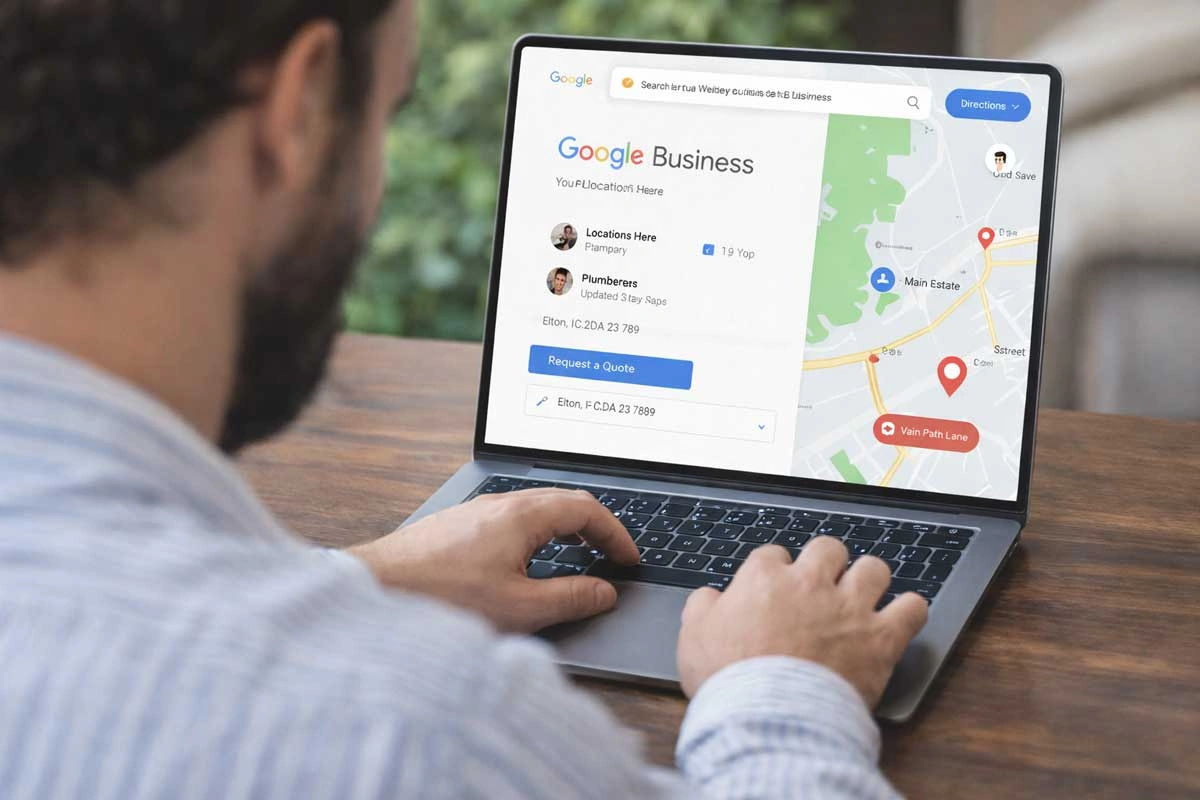
A Google Business Profile allows local businesses to appear in search results and map listings when people look for nearby services. For many companies it is one of the most visible parts of their online presence because it can appear directly within search results before a visitor even reaches a website.
When correctly completed, a profile helps search engines understand what a business does, where it operates and how customers can contact it. This information allows the business to appear when users search for relevant services in their area.
If you want to understand how this fits within the wider framework of local search visibility, begin with Local SEO for Local Business Visibility.
What a Google Business Profile Displays
A business profile appears within local search results and map listings. It normally shows essential details such as the business name, location, contact information and opening hours. Customers can also view photos, read reviews and sometimes ask questions directly through the listing.
Because this information is displayed prominently in search results, it often becomes the first interaction a potential customer has with the business online.
Providing Complete Business Information
One of the most important steps when creating a profile is ensuring that all available fields are completed accurately. Search engines use this information to understand what services the business provides and where those services are available.
Important information normally includes the business name, address, telephone number, website link and service areas. Providing clear details helps search engines connect the business with relevant local searches.
Maintaining consistent information across the website and listings also supports the principles discussed in Proven Local SEO Best Practices.
Verifying the Business Listing
After creating a Google Business Profile, the business must normally be verified before the listing becomes fully active. Verification confirms that the person managing the listing is authorised to represent the business.
In the past, verification was often completed using a postcard sent to the business address. Today, verification frequently takes place through a video submission, particularly for service businesses.
During video verification, the business owner or authorised representative records a short video showing evidence that the business exists and operates as described. This may include exterior signage, access to the premises, equipment used for the service, or proof of management such as access to business tools or documents.
The purpose of verification is to reduce fraudulent listings and ensure customers see accurate information when searching for local services. Some established businesses may still verify quickly, but many service area businesses should expect video verification to be part of the process.
Choosing the Correct Business Category
Business categories help search engines understand the main service offered by the company. Selecting an accurate primary category is important because it helps determine when the listing may appear in search results.
Additional categories can sometimes be used to provide further context about services offered. These categories should accurately reflect the business activities rather than being used simply to add extra keywords.
Adding Photos and Service Information
Visual information helps customers understand what to expect from a business. Photos may show premises, examples of work or images that reflect the services provided.
Keeping service information up to date also helps. Clear service lists and service areas reduce confusion and support relevance for local searches.
Regular updates can also help demonstrate that the business profile is active and maintained.
Customer Reviews and Engagement
Reviews play an important role in how potential customers evaluate local businesses. Many users read feedback from previous customers before deciding whether to contact a company.
Encouraging satisfied customers to leave reviews can help build trust while also contributing to stronger visibility in local search results.
The wider impact of feedback is explored in Online Reviews.
Keeping Business Information Updated
Businesses occasionally change opening hours, service areas or contact details. When these changes occur it is important to update the business profile so the information remains accurate.
Incorrect information can create confusion for customers and weaken the signals search engines use to evaluate a business listing.
Posting Updates and Information
Business profiles allow companies to publish updates or announcements. These posts can provide information about services, availability or relevant business news.
Regular activity helps demonstrate that the listing is actively managed.
Understanding Local Ranking Factors
A completed profile is only one part of appearing in local search results. Search engines evaluate several factors when deciding which businesses to show for a particular query.
These signals include relevance, location and the reputation of the business online.
You can learn more about this in Google Business Profile Ranking Factors.
Connecting the Profile with Website Content
A business profile works best when it supports the information presented on the company website. When the website clearly explains services and locations, it reinforces the signals contained in the listing.
This alignment between website content, listings and reviews helps search engines understand the business more clearly and improves the likelihood of appearing in local results.
Using a Business Profile as Part of Local Marketing
Although a profile can attract enquiries directly, it should normally be viewed as one element of a broader local marketing strategy. Website content, reviews, listings and local relevance all contribute to overall visibility.
These wider marketing principles are explored further in Local Business Marketing Foundations.