
Local SEO Foundations
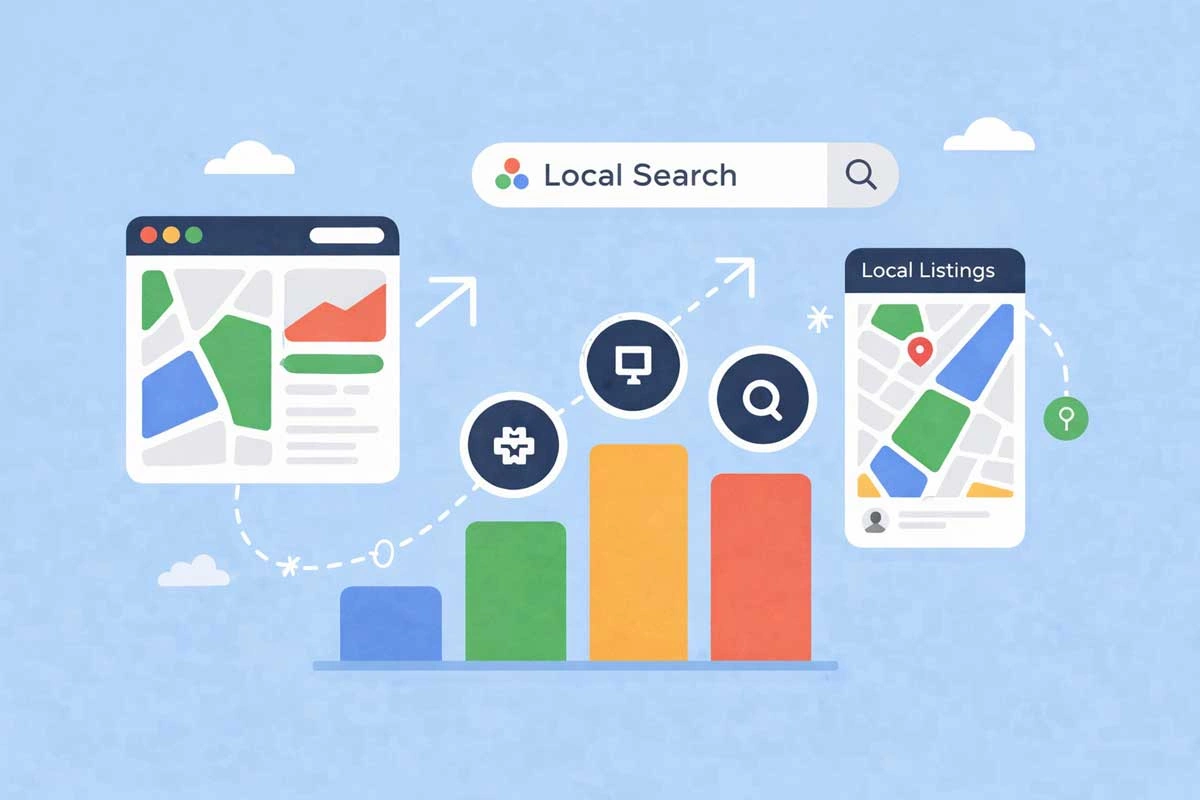
Local SEO helps businesses appear in search results when people look for services in a specific area. For service businesses, the foundations of local SEO are not complicated, but they must be consistent. When the key signals match across your website, business listings and online reputation, search engines can understand your business more clearly.
This article explains the core building blocks that support local visibility. If you want the wider overview first, start with Local SEO for Local Business Visibility.
Clear Website Structure
A simple, well organised website helps search engines find and understand your pages. Your main navigation should make it obvious what the business offers and how visitors can contact you. Core pages typically include services, about and contact.
Service pages should be specific. Instead of broad descriptions, each page should clearly explain what the service involves, who it is for and where it is available. This clarity helps both search engines and potential customers.
On Page Content That Matches Search Intent
Local searches are usually intent driven. People often search using a service and a location, or phrases like near me. Your content should answer those searches by explaining services in practical terms and making it clear that you serve local customers.
This does not mean repeating the same phrase throughout a page. It means using natural wording that clearly describes the service, the service area and what a customer can expect.
Accurate Business Listings
Business listings are a major part of local SEO because they often appear directly in search results. A complete listing helps search engines connect your business with relevant local searches.
Google Business Profile is one of the most important listings for local visibility. It should include accurate contact information, correct categories, service details and opening hours.
If you need the basics, see Google Business Profile Basics.
Consistency of Business Details
Search engines compare your business information across the web. Your business name, address and phone number should match wherever they appear, including your website and directory listings.
Consistency helps search engines confirm that the business is legitimate. When details differ, it can weaken trust signals and reduce visibility.
Local Relevance Signals
Search engines aim to show relevant results based on location. Your website and listings should make it clear where you operate. For some businesses this is a single town. For others it may be a wider service area.
Local relevance can also be supported through content that relates to specific communities or neighbourhoods. This approach is explained in Hyperlocal Content.
Reviews and Trust Signals
Customer reviews help potential customers decide who to contact. They also act as trust signals for search engines. Reviews show that real people are using the service and sharing feedback.
Businesses benefit from consistently receiving genuine reviews over time. They also benefit from responding professionally, which demonstrates engagement and customer care.
This topic is covered in Online Reviews.
Visibility in Maps and Local Results
Many local searches display map results. Appearing in these results can drive calls and enquiries, especially for service businesses.
Map visibility is influenced by profile completeness, relevance, proximity and reputation. You can explore these signals in Google Maps SEO and Google Business Profile Ranking Factors.
Links and Local Mentions
Links and mentions from relevant websites can strengthen authority. This may include local directories, community organisations or industry sites. The key point is relevance and consistency rather than sheer volume.
Local SEO works best when it is supported by a wider structured approach. This is explained in Proven Local SEO Best Practices.
Ongoing Improvement
Local SEO is not a one off task. Businesses should occasionally review their listings, ensure contact details remain accurate and keep website content aligned with services offered.
Over time, consistent information, customer feedback and a clear website structure create stronger signals that support long term local visibility.