
Why Clear Service Areas Matter on a Business Website
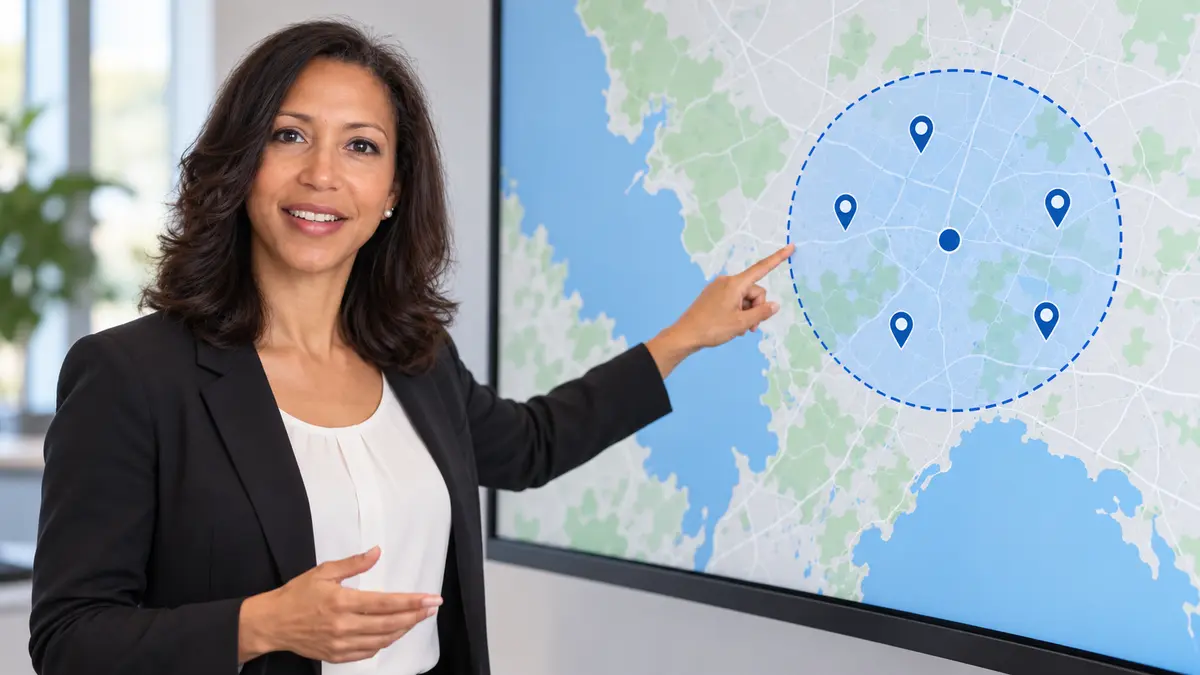
If your business visits customers or serves particular towns, cities and regions, your website should make that coverage clear. Potential customers need to know whether they are within your operating area before they make contact.
Service-area information also provides search engines and other discovery platforms with useful geographical context. However, it needs to be accurate, easy to understand and supported by genuinely helpful content.
Customers Need an Immediate Answer
Someone searching for a local service will usually want to answer a simple question: does this company cover my location?
If the answer is difficult to find, the visitor may leave and choose a competitor whose coverage is clearer. This can happen even when your business would have been willing and able to help.
Common but unhelpful phrases include:
- Serving the local area
- Covering the surrounding region
- Available near you
- Working throughout the community
These descriptions do not define the actual area. A more useful statement might say:
Providing commercial electrical services throughout Birmingham, Solihull, Coventry and the surrounding West Midlands.
This gives the visitor an immediate indication of the company’s geographical coverage.
Place Service-Area Information Where People Can Find It
Do not restrict your location information to the contact page. A concise explanation should appear in several appropriate places across the website.
These may include:
- The opening section of the homepage
- The homepage service-area section
- Individual service pages
- The About page
- The contact page
- The website footer
The wording does not need to be identical everywhere. It should remain accurate and consistent while fitting naturally into each page.
For example, a service page could explain that the service is available across the company’s main city and nearby towns. The contact page could provide a fuller list or invite customers near the edge of the area to ask about availability.
Define the Area the Business Genuinely Covers
Before adding locations to the website, decide how the business actually operates.
Your service area might be based on:
- A particular town or city
- Several neighbouring towns
- A county or group of counties
- A practical travelling radius
- Selected postcode districts
- Different areas for different services
A business does not need to list every village within travelling distance. Start with the primary locations that accurately represent your established operating area.
Avoid adding distant places simply because you would accept an unusually large project there. Your normal service area should reflect where you regularly work and can reasonably serve customers.
Different Services May Have Different Coverage
Some businesses do not have one fixed service area for everything they provide.
An emergency service may operate within a smaller radius because response time matters. Planned work, consultations or larger commercial projects may be available across a wider region.
If coverage varies, explain the distinction clearly.
For example:
Emergency callouts are available across Coventry and nearby areas. Planned commercial projects are undertaken throughout the wider West Midlands.
This prevents unsuitable enquiries while helping customers understand which services are available in their location.
Clear Locations Can Improve Enquiry Quality
When service-area information is missing, businesses may receive calls from customers well outside their practical coverage. Staff then spend time responding to enquiries that cannot be accepted.
Clear information helps customers qualify themselves before making contact. It can increase the proportion of enquiries from people the business can genuinely serve.
It also allows the contact process to be more helpful. You could ask for the customer’s postcode or town on the enquiry form, provided the form remains straightforward and does not request unnecessary information.
Location Information Supports Local Search Context
Search systems use information from several sources to understand where a business operates. These sources may include the website, business listings, structured data, customer reviews and other online references.
Clear location information on the website contributes to this overall understanding. It does not guarantee a particular search position, but it gives search platforms more accurate context.
The locations mentioned on the website should agree with the real business operation and the information displayed on important profiles.
For a service-area business, this is particularly relevant when customers do not visit a public office. The website must clearly explain the regions where services are delivered.
Should You Create a Dedicated Areas Page?
A dedicated service-areas page can be useful when a business covers several important locations. It provides one place where customers can understand the overall geographical coverage.
The page might include:
- The primary service area
- Important towns and cities covered
- Differences between service types
- Travelling or response arrangements
- Links to useful individual location pages
- A way to confirm whether another nearby area is covered
A map can provide additional visual context, but it should not replace written information. Maps are not always precise enough to explain practical business boundaries.
When Are Individual Location Pages Useful?
An individual location page should provide genuinely useful information for customers in that area. It should not be created only to repeat the same text with a different town name.
A helpful location page might contain:
- The services available in that location
- Relevant examples of completed work
- Testimonials from nearby customers
- Local property or industry considerations
- Typical appointment arrangements
- Answers to questions asked by customers in the area
- Links to the most relevant service pages
Only create a separate page when there is enough information to make it distinct and worthwhile.
Avoid Thin and Repetitive Location Pages
Creating dozens of nearly identical pages can produce a poor experience. Visitors may encounter generic text that gives no evidence of a genuine connection with their area.
Changing “Birmingham” to “Coventry” while leaving every other sentence unchanged does not create a useful local resource.
Before publishing a location page, ask:
- Does this page help a customer in this particular location?
- Does it contain information not already covered elsewhere?
- Can the business provide genuine local evidence?
- Is this an area the company regularly serves?
If the answer is no, it may be better to include the location on a broader service-areas page.
Keep Your Locations Consistent Across the Web
Your website is not the only place where customers encounter location information. Review your Google Business Profile, social accounts, business directories and professional listings.
Check that they accurately describe where the business is based and how it serves customers.
Do not create false offices, misleading addresses or duplicate business profiles to appear in additional towns. Location information should reflect the real company.
Review the Service Area as the Business Changes
Coverage may change as the company grows, adds employees or introduces new services. It may also become smaller if particular areas are no longer practical.
Review the website whenever these changes occur. Remove locations that are no longer served and add new areas only when the company can support them properly.
This keeps customer expectations realistic and prevents outdated information from spreading across different platforms.
Make It Easy for Customers to Confirm Coverage
Even a clear service-area page cannot describe every possible boundary. Someone in a nearby town may still be unsure whether you can help.
Include a straightforward invitation such as:
If your location is not listed but you are close to our normal service area, contact us with your postcode and the service required.
This gives the business flexibility without making vague or unrealistic coverage claims.
Remove the Guesswork
Service-area information is a practical part of a local business website. It helps customers determine whether they are suitable, improves the quality of enquiries and gives search platforms clearer geographical context.
A visitor should not need to search through the entire website to discover where you work. State your primary area clearly, explain important differences and create individual location pages only when they provide real value.
To check how consistently your business and location details appear online, use the free business visibility checker.